Rebuilding Trust After Conflict: A Path to Lasting Peace
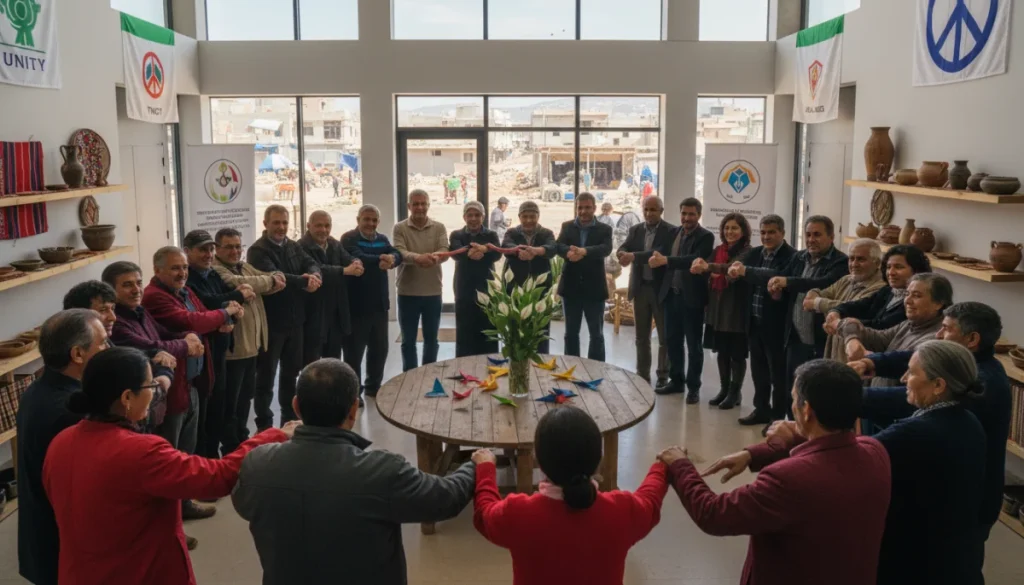
Rebuilding trust after conflict is a complex, multifaceted process essential for sustainable peace, requiring intentional efforts in dialogue, accountability, and community-led initiatives to heal deep societal wounds.
The journey of rebuilding trust after conflict is one of humanity’s most profound challenges. When communities are torn apart by violence, the fabric of trust—between individuals, groups, and institutions—is often shattered. This article explores the intricate pathways toward restoring that trust, examining the strategies, challenges, and successes in creating lasting peace.
Understanding the Erosion of Trust in Conflict Zones
Conflict, by its very nature, systematically erodes trust. It fosters suspicion, fear, and resentment, creating deep divisions that can persist for generations. Understanding how this erosion occurs is the first step toward effective intervention and healing. The mechanisms are complex, often involving psychological, social, and political dimensions.
When violence becomes pervasive, individuals learn to distrust those outside their immediate group for survival. This ‘us vs. them’ mentality is reinforced by propaganda, historical grievances, and the direct experience of harm. The state, often perceived as a protector, may also lose legitimacy if it is seen as a party to the conflict or incapable of ensuring security. This creates a vacuum where informal, often illicit, forms of governance can emerge, further complicating the trust landscape.
The psychological impact of trauma
Trauma inflicted during conflict leaves deep psychological scars, making trust particularly difficult to restore. Victims often struggle with post-traumatic stress, anxiety, and depression, which can manifest as an inability to form secure attachments or believe in the good intentions of others, especially former adversaries.
- Fear and suspicion: Constant threat exposure breeds hyper-vigilance.
- Loss of agency: Victims may feel powerless, impacting their self-worth.
- Moral injury: Witnessing or perpetrating atrocities can shatter one’s moral compass.
Moreover, the collective trauma experienced by communities can lead to a shared sense of victimhood, which, while uniting a group, can also perpetuate animosity towards perceived perpetrators. Breaking this cycle requires acknowledging the pain of all parties and creating spaces for shared narratives, even when those narratives diverge significantly.
The erosion of trust is not merely an absence of positive regard; it is an active presence of fear and suspicion. This makes the work of rebuilding trust not just about fostering positive interactions but first and foremost about dismantling the barriers of fear that prevent genuine engagement. It is a long-term commitment that demands patience, empathy, and a deep understanding of human psychology.
The Foundations of Reconciliation and Healing
Reconciliation and healing are cornerstones of rebuilding trust after conflict. These processes are not about forgetting the past but rather acknowledging it, addressing its consequences, and finding ways to coexist peacefully. It is a journey that often involves multiple stages, from truth-telling to forgiveness, though forgiveness is never a mandatory outcome.
True reconciliation requires a willingness from all parties to engage, often in uncomfortable conversations about past wrongs. This engagement can take many forms, from formal truth commissions to grassroots dialogues, each playing a vital role in creating a shared understanding of history and fostering empathy for others’ experiences. Without this shared understanding, grievances can fester, hindering any progress toward trust.
Truth-telling and accountability
Truth-telling initiatives, such as truth commissions, provide platforms for victims to share their stories and for perpetrators to acknowledge their actions. This transparency is crucial for validating experiences and laying the groundwork for accountability.
- Victim validation: Giving voice to those who suffered most.
- Historical record: Establishing a shared, accurate account of events.
- Justice mechanisms: Paving the way for reparations or legal action.
Accountability doesn’t always mean criminal prosecution; it can also involve symbolic gestures, public apologies, or community service. The key is that those responsible for harm acknowledge their role, and victims feel that their suffering has been recognized and addressed. This process is complex because different communities may have varying ideas of what constitutes justice and accountability, necessitating flexible and context-specific approaches.
Healing, on the other hand, is a more personal journey, often supported by community-based initiatives. It involves individuals and groups processing their trauma, finding meaning in their experiences, and rediscovering their capacity for hope and connection. This can include traditional healing practices, psychological support, and communal rituals that help restore a sense of normalcy and belonging. These efforts are interdependent; accountability can facilitate healing, and healing can make reconciliation possible.
The Role of Justice and Rule of Law
Establishing justice and the rule of law is paramount in post-conflict environments to foster trust in institutions and prevent future violence. When people believe in fair legal processes and equal protection under the law, they are more likely to trust the state and engage in peaceful coexistence. This involves rebuilding or reforming judicial systems, ensuring access to justice, and holding perpetrators accountable.
A functional justice system provides a mechanism for resolving disputes peacefully, rather than through violence. It also signals a commitment to human rights and the principle that no one is above the law. However, designing and implementing such a system in a post-conflict setting is fraught with challenges, including limited resources, corruption, and the legacy of impunity that often characterizes conflict periods.
Transitional justice mechanisms
Transitional justice refers to the set of judicial and non-judicial measures implemented to redress legacies of large-scale human rights abuses. These mechanisms are designed to help societies transition from conflict and repression to peace, democracy, and respect for human rights.
- Truth commissions: Investigating and reporting on past abuses.
- Reparations programs: Providing redress to victims of human rights violations.
- Institutional reforms: Reforming security forces and judicial systems.
The effectiveness of these mechanisms depends heavily on local context and political will. For instance, while international criminal courts can prosecute high-level perpetrators, local courts and traditional justice systems often play a more significant role in addressing everyday grievances and restoring a sense of order at the community level. Integrating these different approaches is crucial for a comprehensive and sustainable justice framework. Without justice, even if imperfect, the cycle of vengeance can easily resurface, undermining all efforts at rebuilding trust.
Moreover, the rule of law extends beyond formal courts to encompass fair governance, transparent institutions, and respect for human rights. When citizens perceive that their government operates justly and serves the interests of all, trust begins to mend. This includes efforts to combat corruption, ensure impartial public services, and protect civil liberties. These foundational elements create an environment where trust can not only be restored but also sustained over time, fostering a stable and peaceful society.
Community-Led Initiatives and Grassroots Peacebuilding
While top-down approaches to justice and governance are vital, the most enduring forms of trust are often rebuilt from the ground up, through community-led initiatives. Grassroots peacebuilding empowers local populations to take ownership of their healing and reconciliation processes, fostering organic connections that transcend historical divides. These initiatives are inherently flexible and culturally sensitive, adapting to the unique needs and traditions of each community.
Community-led efforts often begin with simple, shared activities that bring former adversaries together in non-threatening environments. These can range from joint economic projects to cultural exchanges or sports programs. The goal is to create opportunities for positive interaction, allowing individuals to see beyond stereotypes and recognize their shared humanity. Over time, these interactions can build interpersonal trust, which then radiates outwards to strengthen community bonds.
Dialogue and shared spaces
Creating safe spaces for dialogue is fundamental. These spaces allow individuals to share their stories, express their grievances, and listen to the perspectives of others without fear of retribution. Facilitated dialogues can help bridge divides by fostering empathy and mutual understanding.
- Intergroup dialogues: Structured conversations between opposing factions.
- Trauma-informed discussions: Addressing emotional wounds respectfully.
- Cultural exchange programs: Promoting understanding through shared experiences.
Beyond formal dialogues, the creation of shared physical and social spaces is equally important. Community centers, markets, or public parks where people from different backgrounds can interact naturally help to normalize coexistence. When individuals regularly encounter each other in positive contexts, the barriers of suspicion and fear gradually diminish. These grassroots efforts are powerful because they are sustained by the community members themselves, ensuring their relevance and longevity.
Furthermore, community-led economic development initiatives can play a crucial role. When people work together on projects that benefit everyone, such as rebuilding infrastructure or starting cooperative businesses, they develop a shared stake in peace and stability. These practical collaborations not only improve livelihoods but also demonstrate the tangible benefits of cooperation, reinforcing the idea that working together is more productive than conflict. This practical, tangible aspect of peacebuilding often resonates deeply within communities, making the abstract concept of trust feel more concrete and achievable.
The Role of Education and Memorialization
Education and memorialization are powerful tools in rebuilding trust after conflict, particularly for future generations. Education can foster critical thinking about the causes and consequences of conflict, promote empathy, and teach non-violent conflict resolution skills. Memorialization, on the other hand, ensures that past atrocities are not forgotten, but are remembered in a way that promotes healing and prevents recurrence, rather than fueling renewed grievances.
Curriculum reform in post-conflict societies is crucial. History textbooks, for instance, often present biased narratives that demonize the ‘other.’ Developing inclusive curricula that acknowledge multiple perspectives and promote a nuanced understanding of the past can help young people move beyond inherited animosities. This approach encourages critical engagement with history, rather than rote memorization of a single, often divisive, truth. It empowers students to question, analyze, and ultimately forge their own paths toward peace.
Memorials and remembrance
Memorials, museums, and remembrance days serve as vital spaces for collective mourning and reflection. They honor victims, acknowledge suffering, and provide a public commitment to ‘never again.’ However, the design and narrative of memorials must be carefully considered to avoid exacerbating divisions.
- Inclusive narratives: Representing all victims, not just one side.
- Educational components: Providing historical context and lessons learned.
- Spaces for dialogue: Encouraging reflection and intergroup understanding.
Effective memorialization moves beyond mere commemoration to become an active site of learning and reconciliation. It can offer a space where different groups can come together to acknowledge shared pain, even if their experiences of the conflict were different. For example, joint memorial projects or shared remembrance rituals can help to weave a new, more inclusive collective memory that emphasizes shared humanity over divisive pasts. This process is not about erasing history but about reinterpreting it in a way that supports peace.
Furthermore, peace education programs, both within formal schooling and community settings, can equip individuals with the skills to navigate disagreements constructively. These programs often focus on empathy, active listening, and mediation techniques. By teaching children and adults how to communicate effectively and resolve conflicts without violence, these initiatives directly contribute to the long-term goal of rebuilding trust. They instill a culture of peace that can withstand future tensions, making societies more resilient to conflict.
Sustaining Peace and Preventing Relapse
Rebuilding trust is not a one-time event but an ongoing process that requires continuous effort to sustain peace and prevent relapse into conflict. This involves addressing the root causes of the original conflict, building resilient institutions, and fostering a culture of peace that can withstand future shocks. Without these sustained efforts, gains made in reconciliation can easily erode, leading to renewed cycles of violence.
Economic development and equitable resource distribution are critical for sustaining peace. Grievances often stem from socioeconomic inequalities and a lack of opportunities. By investing in inclusive economic growth, creating jobs, and ensuring fair access to resources, governments can address these underlying tensions and provide tangible reasons for people to maintain peace. When individuals have a stake in the economic stability of their society, they are less likely to resort to conflict.
Building resilient institutions
Strong, democratic institutions that are accountable to their citizens are essential for long-term peace. This includes an independent judiciary, a professional and impartial security sector, and inclusive political processes that allow for diverse voices to be heard and represented.
- Democratic governance: Ensuring fair elections and representation.
- Security sector reform: Building trust in police and military.
- Civil society engagement: Empowering local organizations in governance.
Moreover, fostering a culture of peace requires continuous investment in peace education, human rights awareness, and intergroup dialogue. These initiatives help to embed values of tolerance, respect, and non-violence within society, making conflict less likely to take root. Media also plays a crucial role in this, by promoting balanced reporting and counteracting hate speech that can inflame tensions. A responsible media landscape can be a powerful ally in reinforcing narratives of peace and coexistence.
Finally, regional and international cooperation are often vital for sustaining peace. External support can provide resources, expertise, and diplomatic pressure to help maintain stability, especially in fragile post-conflict states. This includes support for peace agreements, humanitarian aid, and long-term development assistance. However, such support must be carefully managed to avoid creating dependency or undermining local ownership of peace processes. The ultimate goal is to empower societies to maintain their own peace, making external intervention less necessary over time.
| Key Aspect | Brief Description |
|---|---|
| Reconciliation | Acknowledging past harms and fostering coexistence. |
| Justice & Rule of Law | Establishing fair legal systems and accountability. |
| Community Initiatives | Grassroots efforts in dialogue and shared projects. |
| Peace Education | Teaching non-violent conflict resolution and empathy. |
Frequently Asked Questions About Rebuilding Trust
Rebuilding trust is a generational process, often taking decades, not just years. Its duration depends on the conflict’s intensity, the depth of societal divisions, and the sustained commitment to peacebuilding efforts, including reconciliation and justice mechanisms.
International actors can facilitate peace negotiations, provide humanitarian aid, support transitional justice, and help reform institutions. However, their role is most effective when it supports local ownership and capacity-building, avoiding interventions that undermine indigenous efforts.
While forgiveness can be a powerful personal and communal act, it is not a prerequisite for rebuilding trust. Reconciliation can occur through coexistence and mutual respect, even without explicit forgiveness, focusing instead on shared future and peaceful interaction.
Economic development is crucial. It addresses root causes of conflict like inequality and lack of opportunity, providing tangible benefits of peace. Shared economic ventures can foster cooperation and demonstrate that collective effort leads to improved livelihoods for all.
Sustaining trust faces challenges like resurgent political tensions, unresolved historical grievances, and new socioeconomic disparities. Continuous investment in inclusive governance, peace education, and robust conflict resolution mechanisms is essential to prevent relapse.
Conclusion
The process of rebuilding trust after conflict is an immense undertaking, demanding resilience, empathy, and a long-term vision. It is a journey that intertwines justice with healing, top-down governance with grassroots initiatives, and education with memorialization. While daunting, the commitment to restoring trust is not merely an idealistic pursuit; it is a pragmatic necessity for achieving lasting peace and stability in societies scarred by violence. By understanding the complexities, embracing comprehensive strategies, and fostering genuine human connection, communities can slowly but surely mend the broken threads of trust, weaving a stronger, more peaceful future for generations to come.
