Tipping Culture in the US: Social Expectations for Service

Tipping culture in the US is a deeply ingrained social norm, acting as a significant component of service industry workers’ wages and reflecting evolving societal expectations regarding gratuity for various services.
Have you ever paused to consider the unspoken rules when leaving a tip? The Tipping Culture in the US: Social Expectations for Service is a fascinating and often complex aspect of daily life, influencing everything from dining out to getting a haircut. Let’s delve into what makes this system so unique and pivotal.
The historical roots of tipping in America
The practice of tipping in the United States, unlike in many other parts of the world, has a rich and somewhat contentious history. It wasn’t always the entrenched system we know today; its origins trace back to post-Civil War America, heavily influenced by European customs and, unfortunately, by ways to avoid paying formerly enslaved people a living wage.
Initially, tipping was seen as an aristocratic European tradition, often met with resistance by Americans who viewed it as undemocratic and un-American. However, as the hospitality industry grew and with the influx of European immigrants accustomed to the practice, tipping slowly began to take root. By the early 20th century, it was becoming a standard, albeit controversial, practice, particularly in fine dining establishments and luxury services.
European origins and American adaptation
- Early resistance: Many Americans initially resisted tipping, seeing it as an affront to democratic ideals and a practice that perpetuated social hierarchies.
- Post-Civil War influence: The practice gained traction as a way for employers to pay low wages, especially to Black service workers, effectively shifting the burden of fair compensation to the customer.
- Gradual acceptance: Despite early opposition, tipping became more widespread, especially in urban centers and high-end establishments, eventually spreading to other service sectors.
Over time, tipping transformed from a mere gesture of appreciation into an expected component of a service worker’s income, particularly in states where the tipped minimum wage is significantly lower than the standard minimum wage. This economic reliance has solidified its position within American social norms, making it distinct from tipping practices in many other countries where it remains purely discretionary.
Understanding these historical underpinnings is crucial to grasping why tipping holds such a significant place in American society today. It explains why the expectations surrounding it are so deeply embedded and why discussions about its future often evoke strong opinions from both customers and service professionals.
Understanding the economic impact on service workers
For millions of Americans, tips aren’t just extra cash; they are a fundamental part of their livelihood. The economic structure of many service industries, particularly restaurants, relies heavily on customer gratuities to supplement the wages of their staff. This system has profound implications for the financial stability and well-being of service workers across the country.
In most states, employers are allowed to pay tipped employees a lower minimum wage, often referred to as the ‘tipped minimum wage,’ which can be as low as $2.13 per hour federally. The assumption is that tips will make up the difference, bringing their total earnings to at least the standard minimum wage. If tips do not cover this difference, the employer is legally obligated to make up the shortfall. However, in practice, this doesn’t always happen consistently, leaving many workers vulnerable to fluctuating income and financial insecurity.
Wage disparities and income fluctuations
- Tipped minimum wage: Many states permit employers to pay a sub-minimum wage, making tips essential for workers to earn a living wage.
- Income instability: Service workers often face unpredictable income due to variations in customer traffic, service quality perception, and economic conditions.
- Reliance on customer generosity: The financial well-being of staff is directly tied to the discretionary spending and generosity of customers, creating a unique dynamic.
The economic impact extends beyond individual workers to the broader industry. Businesses often factor in the tipping system when structuring their pricing and payrolls, creating a cycle where low base wages are justified by the expectation of tips. This model has fueled debates about fair wages, worker protections, and the overall sustainability of the current tipping system.
Moreover, the shift towards digital payments has introduced new complexities, with some apps and payment systems taking a percentage of tips or delaying their distribution. This further complicates the financial landscape for workers who rely on immediate access to their earned gratuities. The economic reality is that tips are not merely a bonus but a necessity, shaping the daily lives and financial futures of countless service professionals.
Navigating social expectations: when and how much to tip
One of the most perplexing aspects of US Tipping Culture, especially for those unfamiliar with it, is understanding the unwritten rules of when and how much to tip. These social expectations are not static; they vary by industry, service quality, and even geographical location, making them a constant source of confusion and etiquette dilemmas.
Generally, tipping is expected for direct personal services, where an individual performs a task for you. This includes servers, bartenders, barbers, hairdressers, taxi drivers, delivery personnel, and hotel staff. The standard percentages often range from 15% to 20% of the total bill, but these are merely guidelines, and specific situations can call for adjustments. For exceptional service, tipping more is always appreciated, while subpar service might warrant a lower tip or, in extreme cases, no tip at all, though this is rare and often signals a serious issue.
Tipping guidelines across various services
- Restaurants and bars: 15-20% is standard for satisfactory service. For exceptional service, 25% is not uncommon.
- Hair salons and barbershops: 15-20% of the service cost.
- Taxi and rideshare services: 15-20% of the fare, often with an option in the app.
- Food delivery: 15-20% of the food total, with consideration for weather and distance.
- Hotel staff (bellhops, housekeepers): Usually a flat amount per bag or per night, e.g., $2-5.
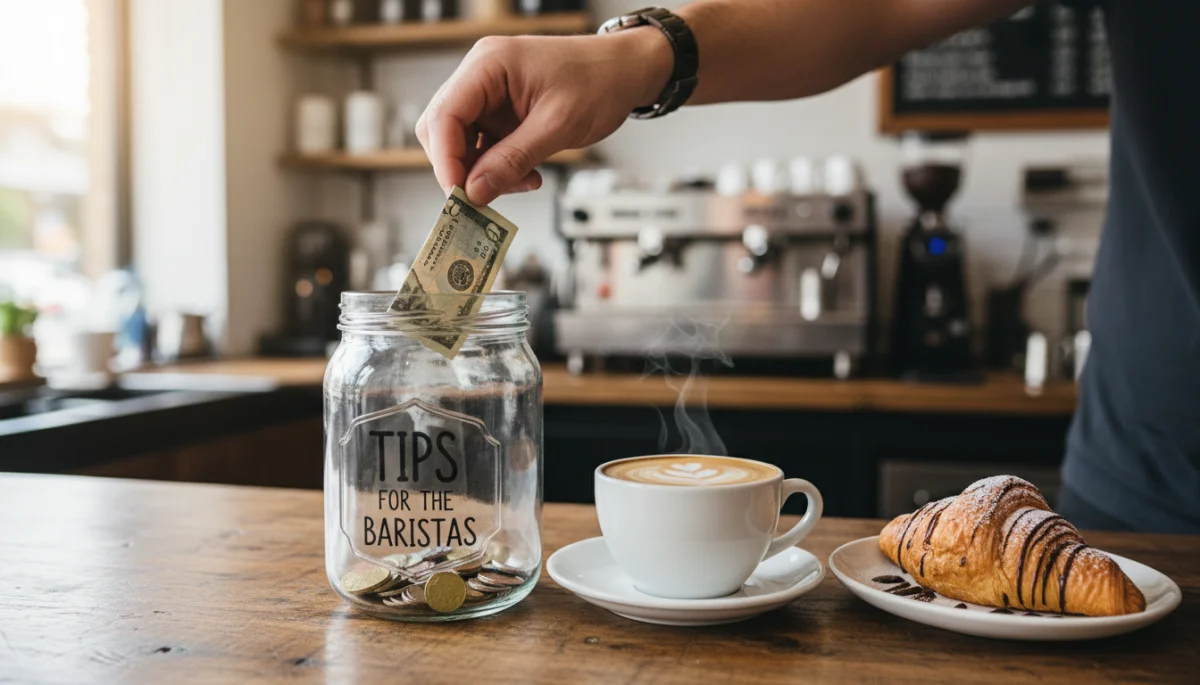
Beyond these percentages, there are nuances. For instance, in coffee shops, a smaller tip in a jar is customary for quick service, while a full-service barista might expect more. For services like movers or furniture delivery, a cash tip is often preferred. The key is to observe local customs and, when in doubt, err on the side of generosity, as it directly impacts the worker’s income.
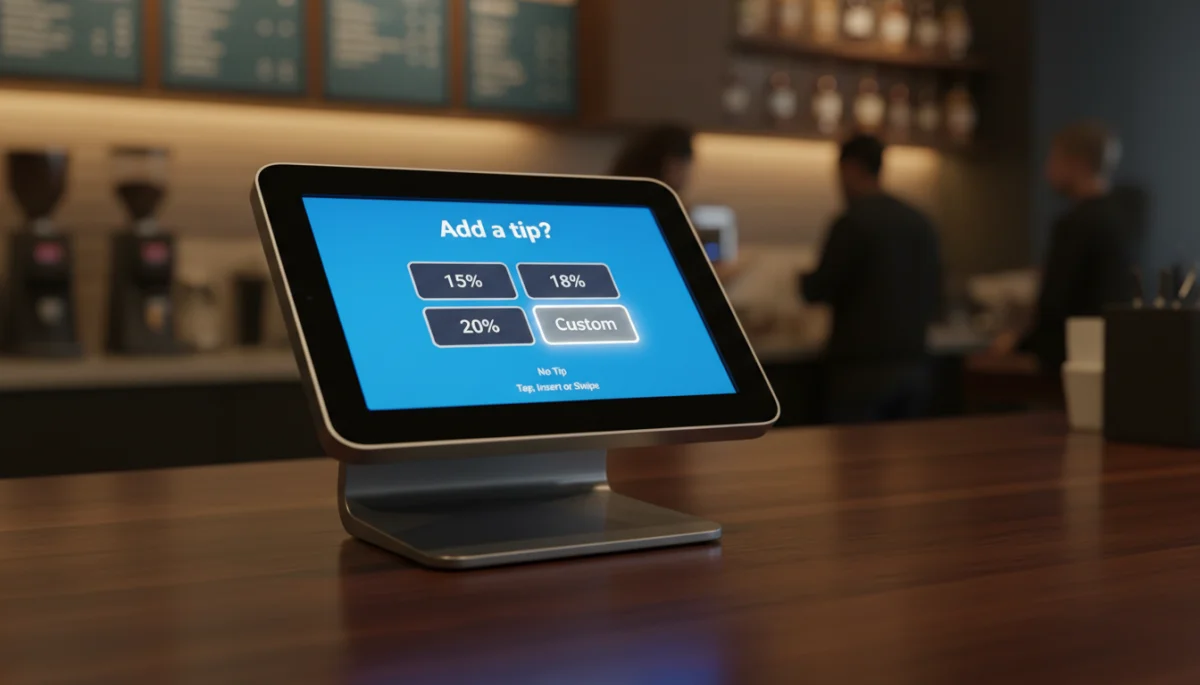
The advent of digital payment systems has also altered tipping practices, often presenting pre-calculated percentage options, which can sometimes influence customer choices. While convenient, it also removes some of the personal discretion involved in cash tipping. Understanding these evolving social expectations is crucial for navigating the American service landscape respectfully and appropriately.
The debate: arguments for and against the tipping system
The American tipping system is a subject of continuous debate, with strong arguments both for and against its continued existence. Proponents often highlight the motivational aspect of tipping, suggesting it incentivizes excellent service and allows top performers to earn more. They argue that it provides flexibility for workers and a direct feedback mechanism for customers to reward good service.
On the other hand, critics point to the inherent inequities and inconsistencies of the system. They argue that it creates income instability for workers, perpetuates wage disparities, and can lead to uncomfortable situations for both employees and customers. The reliance on customer generosity can also be seen as an unfair burden, shifting the responsibility of fair compensation from employers to consumers. Furthermore, critics often cite the historical roots of tipping, which are tied to exploitative labor practices, as a reason for reform.
Key arguments in the tipping debate
- For tipping:
- Motivates excellent service.
- Allows high-performing workers to earn more.
- Provides direct customer feedback.
- Against tipping:
- Creates income instability for workers.
- Perpetuates wage disparities and potentially discriminatory practices.
- Shifts employer responsibility for fair wages to customers.
- Can lead to uncomfortable social dynamics.
The debate also extends to alternative compensation models, such as increasing minimum wages for service staff, implementing service charges, or adopting a “no-tipping” policy. While some establishments have experimented with these alternatives, widespread adoption has been slow, often due to concerns about increased costs for consumers and potential loss of income for highly tipped workers.
Ultimately, the arguments for and against tipping reflect a complex interplay of economic realities, historical legacies, and evolving social values. As society continues to scrutinize labor practices and demand greater equity, the future of tipping in the US remains a topic of significant discussion and potential change.
The psychological aspects of tipping behavior
Beyond the economic and social conventions, tipping behavior is deeply influenced by psychological factors that subtly guide our decisions. It’s not always a purely rational calculation based on service quality; rather, it’s often a blend of social conditioning, emotional responses, and even unconscious biases. Understanding these psychological underpinnings can shed light on why we tip the way we do.
One significant factor is reciprocity. Humans are wired to return favors, and good service often triggers a feeling of obligation to reciprocate with a tip. Social norms also play a powerful role; we tip because we see others doing it, and we want to avoid social disapproval or embarrassment. The fear of being perceived as stingy or rude can be a strong motivator, even if the service wasn’t stellar.
Influences on tipping decisions
- Reciprocity: A desire to return good service with a monetary reward.
- Social norms and conformity: Tipping to align with societal expectations and avoid social judgment.
- Empathy: Tipping more when we perceive the server as needing the money or when we can relate to their work.
- Mood and personal biases: Our own mood, appearance of the server, or even political views can unconsciously affect tip amounts.
- Anchoring: Pre-set tip options on digital payment systems can influence higher tips.
Another interesting psychological aspect is the concept of “anchoring,” especially evident with digital payment systems that offer pre-calculated tip percentages. When presented with options like 18%, 20%, and 22%, customers are often nudged towards higher percentages than they might have chosen independently. The framing of these options can subtly influence behavior, making higher tips seem more normal or expected.
Furthermore, emotional connections, even fleeting ones, can impact tipping. A server who makes eye contact, smiles, or engages in a brief, pleasant conversation might receive a higher tip due to the positive emotional experience. Conversely, a negative interaction, regardless of the objective quality of the service, can lead to a lower tip. These psychological nuances highlight that tipping is far more than a simple transaction; it’s a complex social interaction influenced by a myriad of human factors.
The future of tipping: trends and potential changes
The Tipping Culture in the US is not static; it’s an evolving phenomenon influenced by economic shifts, technological advancements, and changing societal values. Discussions about the future of tipping are gaining momentum, with various trends and potential changes on the horizon that could fundamentally alter how we compensate service workers.
One significant trend is the increasing debate around a “no-tipping” model, where establishments opt to pay their staff a higher, livable wage and eliminate the expectation of gratuity. This approach aims to provide more stable income for employees, reduce wage disparities, and offer more predictable pricing for customers. While some restaurants have successfully implemented this, others have faced challenges, including customer resistance and staff turnover from those who previously earned more through tips.
Emerging trends and alternative models
- No-tipping policies: Restaurants experimenting with higher base wages and removing tip expectations to create more stable incomes.
- Service charges: Implementing mandatory service charges to cover labor costs, often distributed among all staff, including kitchen and back-of-house.
- Technology’s role: Digital payment platforms continue to evolve, influencing how tips are collected, distributed, and even suggested to customers.
- Legislative changes: Ongoing efforts to raise the federal tipped minimum wage or eliminate the tipped wage credit altogether, pushing for a single minimum wage for all workers.
Another alternative gaining traction is the implementation of mandatory service charges, often a percentage added to the bill that is then distributed among all staff, including kitchen and back-of-house employees who traditionally do not receive tips. This model aims to create a more equitable distribution of income across the entire team involved in delivering the service.
Technological advancements also play a crucial role. Apps and digital payment systems are constantly innovating, introducing features like automatic tip suggestions, tip-pooling functionalities, and direct digital tipping options. These technologies streamline the process but also raise questions about transparency and how tips are ultimately handled. As these trends continue to develop, the American tipping landscape is likely to see significant transformations, moving towards models that may offer greater stability and equity for service professionals.
| Key Aspect | Brief Description |
|---|---|
| Historical Roots | Evolved from European customs post-Civil War, tied to low wages for service workers. |
| Economic Impact | Tips are crucial income, supplementing sub-minimum wages for many service staff. |
| Social Expectations | Vary by industry (15-20% common), influenced by service quality and social norms. |
| Future Trends | Debates on no-tipping, service charges, and legislative changes for worker equity. |
Frequently asked questions about US tipping culture
Tipping became deeply entrenched in the US due to historical factors, including its adoption post-Civil War and the legal framework allowing employers to pay a lower minimum wage to tipped workers. This makes tips a vital part of a service worker’s income, unlike in many countries where service charges are included or higher base wages are paid.
For satisfactory service in US restaurants, the standard tipping percentage is generally between 15% and 20% of the pre-tax bill. For exceptional service, many customers opt to tip 25% or more, while for less-than-satisfactory service, a lower percentage might be given, though rarely is no tip left at all.
For quick counter service, like at a coffee shop or takeout, tipping is generally appreciated but not always as strictly expected as in full-service restaurants. A small cash tip in a jar or selecting a small percentage option on a digital screen is common, often reflecting a gesture of appreciation rather than a mandatory supplement to wages.
Not tipping in the US, especially for expected services like dining, can lead to negative social perceptions, as it’s seen as violating a strong social norm. More importantly, it directly impacts the server’s income, as their wages are often structured to rely heavily on tips. While there are no legal repercussions, it can be considered impolite or disrespectful.
Yes, there are ongoing debates and movements to reform the US tipping system. Some establishments are experimenting with “no-tipping” policies by paying higher base wages or implementing service charges. Additionally, legislative efforts are continuously pushing for an increase in the federal tipped minimum wage or its elimination, advocating for a single minimum wage for all workers.
Conclusion
The Tipping Culture in the US: Social Expectations for Service is a multifaceted phenomenon, deeply embedded in the nation’s economic and social fabric. From its complex historical roots to its profound impact on the livelihoods of millions of service professionals, tipping remains a topic of continuous discussion and adaptation. Understanding its nuances, navigating its unwritten rules, and acknowledging its psychological dimensions are essential for both consumers and industry stakeholders. As society evolves and debates about fair compensation persist, the future of tipping in America will undoubtedly continue to be a dynamic and significant area of change, striving for greater equity and clarity in how we value and reward service.
