Navigating Difficult Conversations: Couples’ Communication

Effectively navigating difficult conversations for couples involves active listening, empathy, and structured communication techniques to transform potential conflicts into opportunities for growth and deeper connection.
Every relationship encounters moments that test its foundation. Learning to master couples difficult conversations is not just about resolving conflict, but about building a stronger, more resilient partnership. This article delves into practical approaches that can transform challenging dialogues into powerful opportunities for understanding and intimacy.
Understanding the dynamics of difficult conversations
Difficult conversations are an inevitable part of any long-term relationship. These are not merely disagreements; they are discussions that carry emotional weight, touch upon sensitive topics, or involve differing values and needs. Recognizing the underlying dynamics is the first step toward effective resolution and deeper connection within a partnership.
Often, what makes these conversations ‘difficult’ is not just the topic itself, but the fear of misunderstanding, rejection, or causing pain. Couples might avoid these discussions, leading to resentment and unresolved issues that fester over time. Addressing these fears proactively, and creating a safe environment, is crucial for both partners to feel heard and respected.
The common pitfalls to avoid
When approaching sensitive topics, many couples fall into common traps that escalate tension rather than diffusing it. These pitfalls often stem from ingrained communication habits and emotional responses that can be hard to break without conscious effort. Identifying these patterns is essential for fostering healthier dialogue.
- Blaming: Shifting responsibility onto the other person, which immediately puts them on the defensive.
- Defensiveness: Reacting to perceived attacks rather than listening to the underlying concern.
- Stonewalling: Withdrawing from the conversation, either physically or emotionally, shutting down any possibility of resolution.
- Criticism: Attacking a partner’s character rather than addressing specific behaviors or issues.
Understanding these common pitfalls allows couples to be more mindful of their communication patterns. By actively working to avoid these negative behaviors, partners can create a more constructive environment for discussing challenging subjects. This conscious effort is a cornerstone of effective relationship communication, paving the way for more productive and empathetic interactions.
Ultimately, a difficult conversation is an opportunity for growth. It requires both individuals to step outside of their comfort zones, to be vulnerable, and to trust that their partner is also committed to finding a resolution. By acknowledging the dynamics at play and avoiding destructive patterns, couples can transform potentially damaging interactions into moments that strengthen their bond.
Setting the stage for productive dialogue
Before diving into a sensitive topic, it’s essential to prepare the environment and your mindset for a productive discussion. Rushing into a conversation when emotions are high or distractions are present often leads to unproductive outcomes. Thoughtful preparation can make a significant difference in how the conversation unfolds.
Choosing the right time and place is paramount. Avoid initiating difficult discussions when one or both partners are stressed, tired, or in a hurry. A calm, private setting where you won’t be interrupted allows for focused attention and reduces external pressures. This deliberate approach signals respect for both the conversation and your partner.
Creating a safe and respectful environment
A safe environment means both partners feel secure enough to express their true feelings without fear of judgment or retaliation. This psychological safety is built on mutual respect and a commitment to understanding, even when perspectives differ. It requires an agreement to approach the conversation with kindness and genuine curiosity.
- Agree on ground rules: Establish boundaries for the discussion, such as no yelling, no interrupting, and staying focused on the current issue.
- Choose a neutral location: Sometimes, discussing sensitive matters outside the home, like a quiet park, can help create a more neutral atmosphere.
- Schedule the conversation: Inform your partner in advance that you’d like to talk about something important, allowing them time to mentally prepare.
- Commit to a positive outcome: Approach the conversation with the intention of finding a solution or understanding, rather than winning an argument.
Establishing these foundational elements can significantly improve the chances of a successful difficult conversation. When both partners feel secure and respected, they are more likely to engage openly and honestly, leading to more constructive outcomes. This proactive approach to setting the stage demonstrates a commitment to the relationship’s health and well-being.
Moreover, it’s beneficial to acknowledge your own emotional state before the conversation. If you’re feeling overwhelmed or angry, take a moment to regulate your emotions. This self-awareness prevents emotional outbursts and allows for a more rational and empathetic exchange. Preparing yourself emotionally is just as important as preparing the physical environment.
The power of active listening and empathy
Active listening and empathy are the twin pillars of effective communication, especially during challenging discussions. These skills go beyond simply hearing words; they involve fully engaging with your partner’s perspective, understanding their emotions, and validating their experiences. Without them, even the most well-intentioned conversation can falter.
Active listening means giving your partner your undivided attention, both verbally and non-verbally. It involves putting aside your own agenda, thoughts, and potential rebuttals to truly absorb what they are communicating. This deep level of listening shows respect and builds trust, creating a more receptive environment for dialogue.
Techniques for empathetic understanding
Empathy is the ability to understand and share the feelings of another. In the context of difficult conversations, it means trying to see the situation from your partner’s point of view, even if you don’t agree with it. This doesn’t mean condoning their actions or abandoning your own feelings, but rather acknowledging their emotional reality.
- Reflective listening: Paraphrase what your partner has said to ensure you’ve understood correctly. For example, “So, if I’m hearing you right, you feel frustrated because…”
- Validating feelings: Acknowledge your partner’s emotions without judgment. Statements like, “I can see why you’d feel angry about that,” can be incredibly powerful.
- Asking open-ended questions: Encourage your partner to elaborate on their thoughts and feelings by asking questions that can’t be answered with a simple ‘yes’ or ‘no’.
- Non-verbal cues: Maintain eye contact, nod occasionally, and use an open body posture to convey attentiveness and openness.
Practicing these techniques can transform the dynamic of a difficult conversation. When a partner feels truly heard and understood, their defenses often lower, making them more open to hearing your perspective. This reciprocal understanding is what allows couples to move past impasses and find common ground, even on the most contentious issues.
Empathy is not about finding fault or assigning blame; it’s about connecting on a human level. It recognizes that beneath every difficult conversation are unmet needs or unexpressed feelings. By approaching these discussions with a genuine desire to understand, couples can foster a deeper sense of connection and mutual respect, strengthening their bond in the process.
Constructive communication strategies
Beyond active listening and empathy, specific communication strategies can guide couples through difficult conversations more effectively. These methods provide a framework for expressing needs, concerns, and emotions in a way that promotes understanding and resolution, rather than escalating conflict. Implementing these strategies requires practice and commitment from both partners.
One fundamental strategy is the use of “I” statements. Instead of accusatory “you” statements, which often trigger defensiveness, “I” statements focus on your feelings and experiences. This approach takes ownership of your emotions and communicates your perspective without assigning blame, making it easier for your partner to listen and respond empathetically.

Using “I” statements effectively
The structure of an effective “I” statement typically involves expressing a feeling, identifying the specific behavior or situation that triggered it, and explaining the impact of that behavior. This clear and concise approach helps your partner understand your experience without feeling attacked.
- State your feeling: “I feel [emotion]…”
- Describe the behavior/situation: “…when [specific behavior/situation happens]…”
- Explain the impact: “…because [impact on you or the relationship].”
For example, instead of saying, “You always ignore me when I’m talking,” try, “I feel unheard when I’m speaking and you’re looking at your phone, because it makes me feel like what I’m saying isn’t important.” This shift in language can dramatically change the tone and outcome of the conversation.
Another powerful strategy is to focus on one issue at a time. It’s easy for difficult conversations to derail into a multitude of past grievances. However, tackling too many issues at once can be overwhelming and unproductive. Agree to address one specific topic thoroughly before moving on, ensuring that each concern receives the attention it deserves.
Furthermore, taking breaks when needed is a sign of emotional intelligence, not avoidance. If a conversation becomes too heated or either partner feels overwhelmed, agree to pause and revisit the discussion later. This allows both individuals to cool down, gather their thoughts, and return with a calmer, more constructive mindset. Establishing a clear time to resume the conversation prevents it from being indefinitely postponed.
Managing emotions and de-escalating tension
During difficult conversations, emotions can run high, making it challenging to think clearly and communicate effectively. Learning to manage your own emotions and de-escalate tension is critical for preventing arguments from spiraling out of control. This requires self-awareness and a conscious effort to regulate your responses.
Recognizing the physical signs of escalating tension—such as a racing heart, clenched jaw, or rising voice—is the first step. Once you identify these signals, you can employ strategies to calm yourself down. Taking a brief timeout, practicing deep breathing, or simply acknowledging your feelings can help regain composure and prevent an emotional outburst.
Techniques for emotional regulation
Emotional regulation isn’t about suppressing feelings but managing how they are expressed. It involves taking responsibility for your emotional responses and choosing constructive ways to communicate them, even when you’re feeling upset. This skill is vital for maintaining a respectful and productive dialogue.
- Take a timeout: If either partner feels overwhelmed, agree to take a break (e.g., 20-30 minutes) to calm down. Agree on a specific time to resume the conversation.
- Deep breathing exercises: Focus on slow, deep breaths to activate the parasympathetic nervous system, which helps reduce stress and anxiety.
- Mindful self-talk: Challenge negative or catastrophic thoughts with more realistic and positive affirmations. Remind yourself of your goal for the conversation.
- Physical activity: A short walk or light exercise can help release pent-up energy and clear your head before returning to the discussion.
When one partner is becoming emotionally overwhelmed, the other partner can play a crucial role in de-escalation. This involves speaking calmly, using a soft tone, and avoiding any language that could be perceived as provocative or accusatory. Focusing on validating their feelings, even if you don’t agree with their perspective, can help reduce their emotional intensity.
The goal is to create an environment where both partners feel safe to express their emotions without fear of judgment or further escalation. By consciously practicing emotional regulation and de-escalation techniques, couples can transform highly charged situations into opportunities for mutual support and understanding, strengthening their emotional bond.
Finding common ground and compromise
The ultimate aim of navigating difficult conversations is not necessarily to win an argument, but to find common ground and compromise that respects both partners’ needs and desires. This often requires flexibility, creativity, and a willingness to see beyond individual positions to the shared goal of a healthy relationship. Compromise is not about giving in, but about finding a mutually acceptable path forward.
Identifying the core needs beneath each partner’s position is key. Often, what appears to be a disagreement about a specific issue is actually a reflection of deeper unmet needs, such as a need for security, respect, or autonomy. By understanding these underlying needs, couples can explore a wider range of solutions that address both individuals’ concerns.
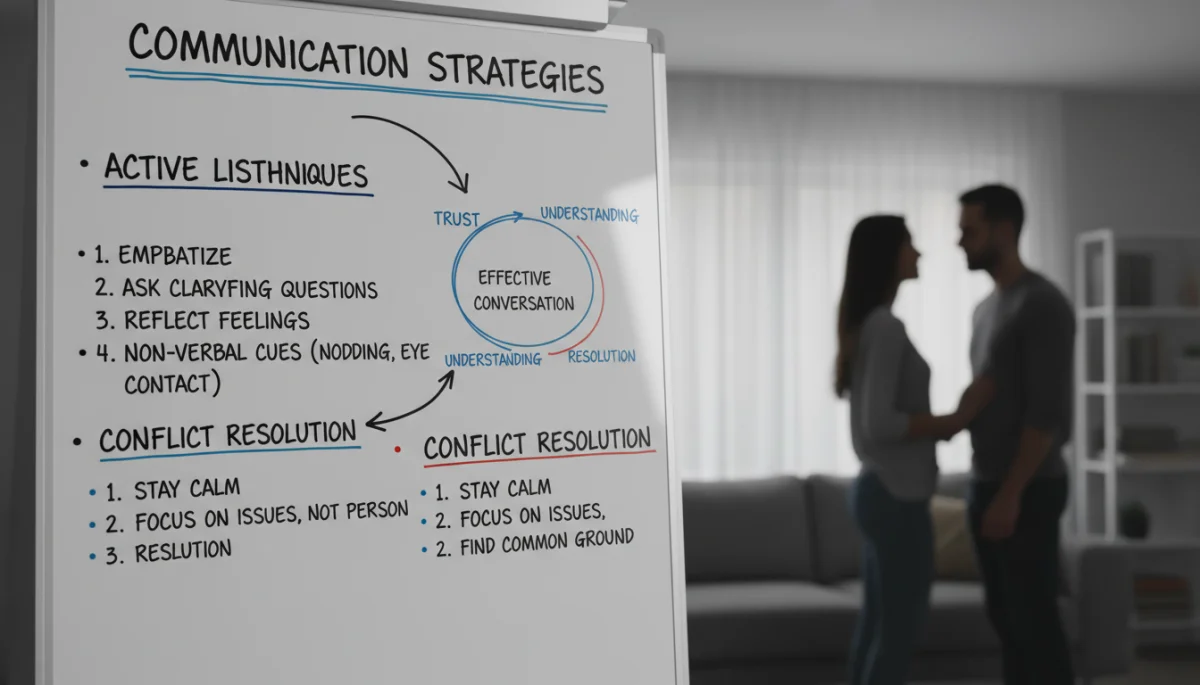
Strategies for collaborative problem-solving
Collaborative problem-solving involves working together as a team to brainstorm solutions that satisfy both partners. This approach moves away from an adversarial dynamic and fosters a sense of unity, reinforcing the idea that you are both on the same side, working towards a common goal.
- Brainstorm solutions together: Generate a list of possible solutions without immediately judging their feasibility. Encourage creative thinking.
- Evaluate options based on needs: Discuss how each potential solution addresses the core needs of both partners.
- Be willing to adjust expectations: Sometimes, compromise means letting go of an ideal outcome for a workable one that benefits the relationship.
- Focus on win-win outcomes: Strive for solutions where both partners feel their concerns have been heard and addressed, even if it’s not exactly what they initially wanted.
Successful compromise doesn’t mean one person gives everything up. Instead, it’s about finding a middle ground where both partners feel respected and valued. This might involve trading off on certain issues or finding entirely new solutions that neither partner initially considered. The process itself builds resilience and strengthens the couple’s ability to navigate future challenges.
Once a compromise or solution is reached, it’s important to confirm understanding and commitment from both sides. Clearly state what has been decided and how it will be implemented. This clarity prevents future misunderstandings and reinforces the success of the difficult conversation, solidifying the couple’s ability to work through disagreements effectively.
Sustaining healthy communication habits
Navigating difficult conversations isn’t a one-time event; it’s an ongoing process that benefits from consistent practice and the development of healthy communication habits. Building these habits strengthens the relationship’s foundation, making future challenging discussions easier to approach and resolve. It’s about cultivating a culture of openness and mutual respect.
Regular check-ins are vital. Don’t wait for issues to escalate into full-blown crises before addressing them. Scheduling regular, brief conversations about how you’re both feeling, what’s going well, and any minor concerns can prevent small issues from becoming major problems. This proactive approach fosters an environment where difficult topics are less intimidating.
Practices for ongoing relationship health
Beyond specific conversation techniques, certain daily practices contribute to overall relationship health and make navigating tough talks more manageable. These habits reinforce trust, intimacy, and a sense of partnership, which are crucial when facing challenges.
- Daily connection: Dedicate a few minutes each day to genuinely connect with your partner, even if it’s just a brief chat about your day.
- Express appreciation: Regularly acknowledge and thank your partner for their efforts, qualities, and contributions to the relationship.
- Regular date nights: Prioritize quality time together to nurture your bond and create positive shared experiences.
- Seek professional support: Don’t hesitate to consider couples therapy or counseling if you find yourselves repeatedly stuck on certain issues or struggling to communicate effectively.
Building a strong emotional bank account through positive interactions makes withdrawals during difficult conversations less impactful. When there’s a history of love, respect, and mutual support, partners are more likely to extend grace and understanding during challenging times. This resilience is a hallmark of healthy, enduring relationships.
Ultimately, sustaining healthy communication habits is about continuously investing in your relationship. It requires ongoing effort, patience, and a shared commitment to growth. By embracing these practices, couples can not only navigate difficult conversations with greater ease but also deepen their connection and build a more fulfilling partnership over time.
| Key Point | Brief Description |
|---|---|
| Preparation is Key | Choose the right time and place, and set ground rules for respectful dialogue. |
| Active Listening | Truly hear and understand your partner’s perspective through reflective listening and validation. |
| “I” Statements | Express feelings and needs without blame, focusing on your own experience. |
| Emotional Regulation | Manage your emotions and de-escalate tension through timeouts and calming techniques. |
Frequently asked questions about difficult conversations
Difficult conversations are crucial because they address underlying issues, prevent resentment from building, and foster deeper understanding and intimacy. They provide opportunities for growth, allowing couples to navigate challenges together and strengthen their bond by openly discussing sensitive topics rather than avoiding them.
Start by choosing the right time and place, and use “I” statements to express your feelings and needs without blame. Frame the conversation as a shared problem to solve, rather than an accusation. For example, “I’ve been feeling [emotion] about [situation], and I’d like to talk about it with you when you have a moment.”
If one partner avoids difficult conversations, it’s important to understand why. They might fear conflict or feel overwhelmed. Approach them gently, express your need to discuss issues, and reassure them that your goal is understanding, not blame. Suggest a structured approach and perhaps a limited time frame to make it less intimidating.
Ensure both partners feel heard by practicing active listening, which includes reflective listening and validating each other’s feelings. Agree to take turns speaking without interruption, and summarize what you’ve heard your partner say before responding. This confirms understanding and shows respect for their perspective, making them feel valued.
Couples should seek professional help when communication patterns become consistently negative, lead to frequent arguments without resolution, or when partners feel emotionally distant. If self-help strategies aren’t effective, or if there’s a history of unresolved issues, a therapist can provide tools and a neutral space to facilitate healthier dialogue and progress.
Conclusion
Navigating Difficult Conversations: Approaches for Couples is an essential skill for any lasting relationship. By embracing preparation, active listening, empathy, constructive communication strategies, and emotional regulation, couples can transform potentially damaging conflicts into opportunities for growth and deeper connection. These practices not only resolve immediate issues but also build a resilient foundation for future challenges, fostering a partnership built on trust, respect, and profound understanding. The journey of effective communication is continuous, but the rewards of a stronger, more intimate relationship are immeasurable.
