Communication Styles Across Generations: Stronger Bonds

Understanding and adapting to diverse generational communication styles is crucial for fostering stronger connections and enhancing collaboration in both personal and professional settings.
In an increasingly interconnected world, understanding generational communication styles is not merely an advantage; it is a necessity. Our ability to connect, collaborate, and thrive depends heavily on how effectively we navigate the nuanced linguistic and behavioral landscapes shaped by age and experience.
Understanding the Generational Divide in Communication
The way we communicate is deeply influenced by the era in which we grew up. Each generation has been shaped by unique historical events, technological advancements, and cultural norms, all of which leave an indelible mark on their preferred communication methods and expectations. Recognizing these foundational differences is the first step toward bridging any potential gaps.
Ignoring these distinctions can lead to misunderstandings, frustration, and a breakdown in relationships, whether in the workplace, within families, or even in casual social interactions. Effective intergenerational communication requires empathy and a willingness to adapt our approach to resonate with others.
The Impact of Historical Context
Historical events play a significant role in shaping a generation’s worldview and, consequently, their communication style. For example, generations that lived through major wars or economic depressions often value directness and practicality, while those growing up in periods of rapid technological change might prioritize speed and digital fluency.
- Silent Generation (Born 1928-1945): Often value formal communication, respect for authority, and face-to-face interactions. They tend to be polite and appreciate traditional etiquette.
- Baby Boomers (Born 1946-1964): Prefer direct communication, often through phone calls or in-person meetings. They value loyalty and professional demeanor, and appreciate detailed information.
- Generation X (Born 1965-1980): Known for their independent and skeptical nature, they prefer concise and direct communication, often through email. They value work-life balance and less formality.
- Millennials (Born 1981-1996): Grew up with the internet and mobile phones, favoring digital communication (email, text, social media). They value collaboration, feedback, and purpose-driven conversations.
- Generation Z (Born 1997-2012): Digital natives who are highly comfortable with visual communication, short-form content, and instant messaging. They prioritize authenticity, speed, and inclusivity.
Understanding these general tendencies allows us to tailor our messages more effectively, reducing the likelihood of misinterpretation. It is about meeting people where they are, rather than expecting them to conform to our preferred style.
Ultimately, appreciating the historical context behind different communication styles enriches our interactions. It moves us beyond mere tolerance to a genuine understanding of why individuals communicate the way they do, fostering deeper connections.
Decoding Communication Preferences: From Boomers to Gen Z
Each generation has developed distinct preferences regarding how they send and receive information, which channels they prefer, and what they expect from a communicative exchange. These preferences are not arbitrary but are rooted in their life experiences and technological exposure.
Navigating these preferences effectively requires a keen eye for observation and a willingness to learn. It’s about recognizing that what works for one generation might be perceived as inefficient or even disrespectful by another.
Baby Boomers: Valuing Personal Connection
Baby Boomers, having experienced significant social and economic shifts, typically value personal interaction. They often prefer phone calls or face-to-face meetings for important discussions, seeing these methods as more sincere and effective for building rapport. Written communication, like emails, is often expected to be formal and comprehensive.
- Preferred Channels: Phone calls, in-person meetings, formal emails.
- Key Traits: Value loyalty, directness, and established protocols.
- Expectations: Clear objectives, structured discussions, respect for hierarchy.
When communicating with Baby Boomers, it is often best to prioritize direct conversations and provide ample context. They appreciate thoroughness and a professional approach, which demonstrates respect for their experience and wisdom.
Generation X: The Independent Pragmatists
Generation X often acts as a bridge between the traditional and the digital. They are self-reliant and pragmatic, preferring efficient communication that gets straight to the point. Email is a favored channel, allowing for quick information exchange without unnecessary pleasantries. They value autonomy and are often skeptical of overly elaborate communication strategies.
Their communication style tends to be more informal than Boomers but less instant than Millennials or Gen Z. They appreciate concise messages that allow them to process information independently and respond at their convenience.
Millennials: Collaborative and Digitally Savvy
Millennials are the first generation to grow up with widespread internet access, making them highly comfortable with digital communication. They thrive in collaborative environments and value open feedback. Email, instant messaging, and project management tools are common, but they also appreciate video calls for more personal or complex discussions.

They seek purpose and meaning in their interactions and are generally open to new technologies. Providing regular feedback and opportunities for input can significantly enhance communication with this group.
Generation Z: The Digital Natives
Gen Z has never known a world without the internet or smartphones. Their communication is often characterized by speed, visual content, and authenticity. They prefer instant messaging, social media platforms, and short-form videos. They are highly adept at multitasking across different digital channels and expect immediate responses.
- Preferred Channels: Instant messaging, social media, video platforms, emojis.
- Key Traits: Value authenticity, speed, inclusivity, and visual content.
- Expectations: Quick responses, brevity, visual aids, transparent communication.
Communicating with Gen Z often means embracing brevity, visuals, and the platforms they frequent. They appreciate genuine interactions and are less tolerant of formality or lengthy explanations. Understanding these distinct preferences is key to fostering strong connections across the generational spectrum.
Bridging the Gap: Strategies for Effective Intergenerational Communication
Effective communication across generations is not about forcing everyone into a single mold, but rather about developing strategies that acknowledge and leverage diverse styles. It requires a conscious effort to adapt and build bridges of understanding.
The goal is to create an conspicuously an environment where all voices feel heard and valued, regardless of their preferred mode of expression. This leads to richer discussions, more innovative solutions, and stronger relationships.
Active Listening and Empathy
One of the most powerful tools for bridging any communication gap is active listening. This means not just hearing words, but truly understanding the speaker’s perspective, motivations, and underlying message. Coupled with empathy, it allows us to step into another person’s shoes and appreciate their communication style.
- Practice non-judgmental listening: Avoid forming opinions or rebuttals while someone is speaking.
- Ask clarifying questions: Ensure you fully grasp their meaning, especially when different communication styles might lead to ambiguity.
- Mirror and validate: Reflect back what you’ve heard to confirm understanding and show you’re engaged.
Empathy helps us recognize that a Boomer’s preference for a phone call isn’t about being resistant to technology, but perhaps about valuing personal connection, just as a Gen Z’s preference for text isn’t about being dismissive, but about efficiency.
Adapting Communication Channels
Flexibility in choosing communication channels is paramount. Instead of insisting on our preferred method, consider what works best for the recipient. If you’re communicating with a Baby Boomer about a sensitive topic, a phone call might be more appropriate than an email. For a quick update with a Millennial or Gen Z, a text or instant message could be ideal.
In a professional setting, this might involve offering multiple options for communication, such as a team-wide email for announcements, followed by a brief video conference for questions, and individual check-ins as needed. The key is to be versatile and responsive to the needs of others.
Clarity, Conciseness, and Context
Regardless of the generation, clarity and conciseness are universally appreciated. While some generations may prefer more detail than others, everyone benefits from messages that are easy to understand and free of jargon.
Providing context is also crucial. Explain the ‘why’ behind your message, as this helps bridge understanding gaps, particularly when different generations might have different assumptions or background knowledge. For example, when introducing a new digital tool, explain its benefits in terms that resonate with each generation, highlighting efficiency for Gen X, collaboration for Millennials, and security for Boomers.
By consciously applying these strategies, we can move beyond simply tolerating differences to actively fostering an environment where intergenerational communication thrives, leading to stronger bonds and more productive outcomes.
Workplace Dynamics: Navigating Multi-Generational Teams
The modern workplace is a melting pot of generations, each bringing unique perspectives, work ethics, and communication habits. Harnessing this diversity is a significant competitive advantage, but it requires thoughtful leadership and intentional communication strategies.
Miscommunications in a multi-generational team can lead to decreased productivity, conflict, and a sense of alienation. Therefore, understanding and addressing these differences is critical for fostering a cohesive and high-performing environment.
Leadership’s Role in Fostering Inclusivity
Leaders play a crucial role in setting the tone for intergenerational communication. They must champion an inclusive culture where all communication styles are respected and understood. This involves modeling adaptable communication, providing training, and creating platforms for open dialogue.
- Provide training on generational differences: Educate employees on varying communication preferences and how to adapt.
- Establish clear communication guidelines: Define expectations for different types of communication (e.g., when to email vs. call).
- Encourage mentorship programs: Pair employees from different generations to facilitate knowledge transfer and mutual understanding.
By actively promoting an environment of understanding and respect, leaders can transform potential generational friction into a source of strength and innovation within the team.
Leveraging Technology Wisely
Technology can be both a bridge and a barrier in multi-generational teams. While younger generations might gravitate towards the latest digital tools, older generations might prefer more traditional methods. The key is to leverage technology wisely, ensuring it enhances communication rather than complicating it.
This means adopting tools that are accessible and intuitive for everyone, and providing adequate training for those less familiar with new platforms. For instance, using a project management tool that integrates various communication features (chat, video, document sharing) can cater to diverse preferences, allowing team members to choose their comfort zone while staying connected.
Promoting Reverse Mentorship
Reverse mentorship, where younger employees mentor older ones on topics like technology or social media, can be incredibly effective. It not only transfers valuable skills but also fosters mutual respect and understanding across generational lines. This informal exchange breaks down hierarchical barriers and encourages more natural, open communication.
In conclusion, creating a thriving multi-generational workplace demands proactive strategies that acknowledge and integrate different communication styles. By fostering an inclusive environment, leveraging technology thoughtfully, and promoting cross-generational learning, organizations can unlock the full potential of their diverse workforce.
Family Harmony: Navigating Generational Communication at Home
The dynamics of generational communication extend far beyond the workplace, profoundly impacting family relationships. From everyday conversations to significant life discussions, understanding how different family members prefer to communicate can strengthen bonds and reduce conflict.
Family life often presents a unique challenge, as emotional connections are deeply intertwined with communication patterns. Recognizing these patterns is essential for fostering harmony and mutual respect within the home.
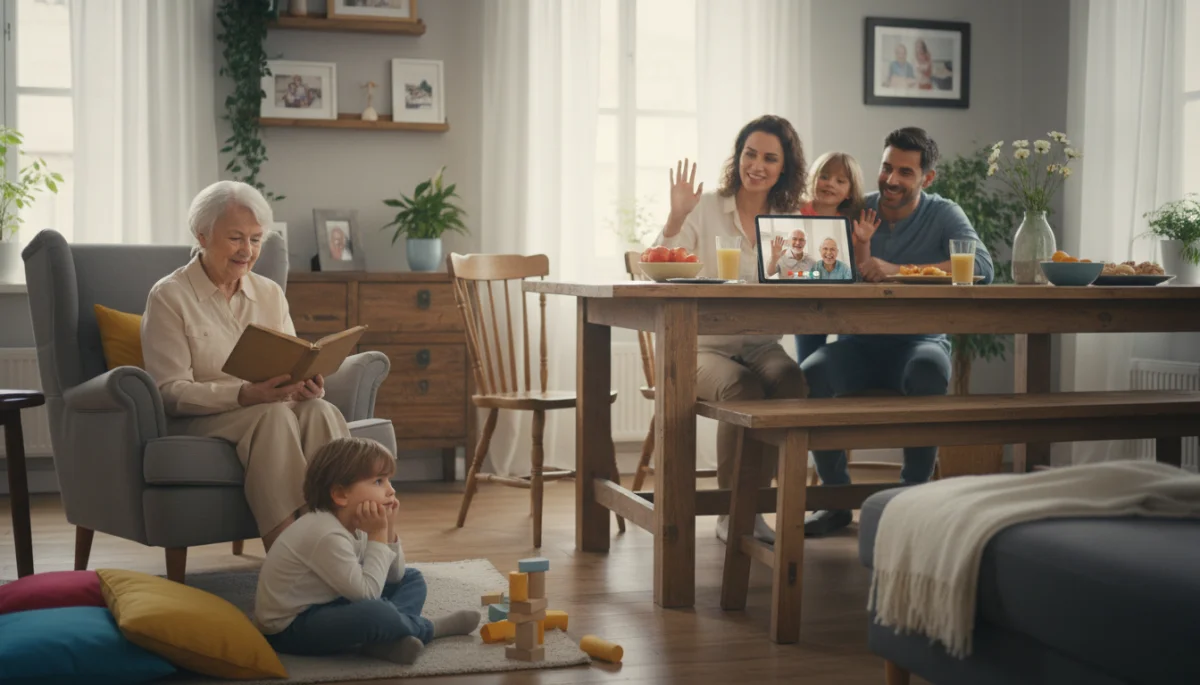
Grandparents and Grandchildren: Bridging the Digital Divide
Grandparents (often Silent Generation or Baby Boomers) and grandchildren (Millennials or Gen Z) represent the widest generational gap, often marked by significant differences in technological fluency. Grandparents might prefer phone calls, handwritten letters, or in-person visits, while grandchildren are comfortable with texting, video calls, or social media.
To bridge this divide, both sides can make an effort. Grandchildren can teach grandparents how to use video calls, while grandparents can share stories in person, fostering a deeper connection. The goal is to find common ground and appreciate the value of each communication method.
Parents and Children: Evolving Conversations
Parents (often Gen X or Millennials) and their children (Gen Z or Alpha) face evolving communication challenges. As children grow, their preferred communication methods shift. Teenagers, for instance, might be less inclined to engage in long phone calls but more responsive to quick texts or direct messages.
- Be flexible with communication channels: Understand that a quick text might be more effective than a lengthy conversation for some topics.
- Set clear expectations: Discuss when and how different topics should be communicated.
- Encourage face-to-face time: Despite digital preferences, prioritize regular in-person interactions for deeper connection.
Establishing open lines of communication, even if the methods vary, is crucial. Parents can adapt their approach to meet their children where they are, while also teaching the value of different forms of interaction.
The Role of Shared Experiences
Beyond specific communication methods, shared experiences are powerful catalysts for intergenerational understanding within families. Activities that bring everyone together, from family dinners to vacations, create natural opportunities for conversation and bonding, transcending individual communication preferences.
These shared moments allow for organic conversations that build empathy and reinforce familial ties. By creating a culture of open communication and valuing each family member’s unique contribution, harmony can be achieved even with diverse generational styles.
The Future of Communication: Adapting to Evolving Norms
Communication is not static; it is a constantly evolving landscape shaped by technological innovation, cultural shifts, and generational transitions. As new generations emerge and technologies advance, our understanding of effective communication must also adapt.
Anticipating these changes and proactively developing adaptable communication strategies will be key to maintaining strong connections in the future, both personally and professionally. The ability to learn and unlearn communication habits will be a valuable skill.
The Rise of AI and Automation in Communication
Artificial intelligence and automation are already transforming how we communicate, from AI-powered chatbots to automated email responses. While these tools offer efficiency, they also raise questions about authenticity and the human element in communication.
Future communication strategies will need to balance the benefits of automation with the need for genuine human connection. Understanding when to use AI-driven tools and when a personal touch is indispensable will be critical for all generations.
Visual and Immersive Communication
The increasing prevalence of visual content and immersive technologies, such as virtual and augmented reality, suggests a future where communication is even more experiential. Younger generations are already adept at processing information visually and through interactive experiences.
- Embrace visual storytelling: Utilize images, videos, and infographics to convey messages effectively.
- Explore immersive platforms: Consider how VR/AR could enhance future collaborative or learning experiences.
- Focus on interactive content: Engage audiences through polls, quizzes, and other interactive elements.
Adapting to these trends means moving beyond text-heavy communication to more dynamic and engaging formats, which will resonate particularly well with future generations.
The Importance of Digital Literacy and Etiquette
As communication becomes increasingly digital, universal digital literacy and a shared understanding of online etiquette will be more important than ever. This includes everything from understanding privacy settings to recognizing the nuances of tone in text-based conversations.
Education across generations on safe and effective digital communication practices will be essential to prevent misunderstandings and foster respectful online interactions. The future of communication demands continuous learning and a willingness to embrace new paradigms while preserving the core elements of human connection.
Cultivating Empathy and Flexibility for Stronger Bonds
Ultimately, the success of intergenerational communication hinges on two fundamental qualities: empathy and flexibility. While understanding generational differences provides a valuable framework, it is the willingness to apply this knowledge with compassion and adaptability that truly builds stronger bonds.
Empathy allows us to appreciate the underlying reasons for different communication styles, moving beyond judgment to genuine understanding. Flexibility enables us to adjust our approach, ensuring our message is received as intended, regardless of the recipient’s generational background.
Practicing Empathetic Listening
Empathetic listening goes beyond merely hearing words; it involves actively trying to understand the speaker’s feelings, perspectives, and experiences. When engaging with someone from a different generation, take a moment to consider their likely frame of reference, their historical context, and their preferred modes of interaction.
For example, if a younger colleague seems overly reliant on text messages, instead of dismissing it as unprofessional, consider that they might view it as efficient and non-intrusive. An empathetic approach would be to acknowledge their preference while gently suggesting a brief call for more complex discussions.
Developing Communication Flexibility
Flexibility in communication means being able to switch between different channels, tones, and levels of formality as needed. It’s about being a communication chameleon, adapting your style to suit the situation and the person you’re interacting with.
- Vary your channels: Don’t stick to just email or just phone calls; use a mix depending on the message and recipient.
- Adjust your language: Use appropriate terminology and avoid jargon that might alienate specific generations.
- Be open to feedback: Ask others how they prefer to communicate and be willing to adjust your approach based on their input.
This adaptability signals respect and a genuine desire to connect, which are powerful ingredients for building trust and rapport across generational lines. It shows that you value the relationship more than your personal communication preferences.
Creating Shared Communication Norms
In both professional and personal settings, establishing shared communication norms can significantly enhance intergenerational interactions. This doesn’t mean imposing a single style, but rather collaboratively defining how certain types of information will be exchanged.
For instance, a family might agree that important news is always shared via a phone call or in person, while casual updates can be texted. In a workplace, a team might decide that urgent matters require a call, while project updates can be handled via a collaborative platform. These agreed-upon norms reduce ambiguity and foster a more predictable and harmonious communication environment.
By consciously cultivating empathy and flexibility, and working towards shared communication norms, we can transform potential generational divides into opportunities for richer, more meaningful interactions, ultimately leading to stronger bonds in all aspects of life.
| Key Aspect | Brief Description |
|---|---|
| Generational Nuances | Each generation has unique communication preferences shaped by historical and technological influences. |
| Adaptability | Adjusting communication channels and styles is crucial for effective intergenerational interactions. |
| Empathy & Listening | Active listening and empathy are foundational for understanding diverse generational perspectives. |
| Building Bonds | Strategic communication fosters stronger relationships in families and multi-generational workplaces. |
Frequently Asked Questions About Generational Communication
Understanding generational communication styles is crucial because it reduces misunderstandings, fosters empathy, and strengthens relationships in both personal and professional settings. It allows individuals to tailor their messages effectively, promoting better collaboration and mutual respect across age groups.
Baby Boomers typically prefer formal, direct communication via phone calls or in-person meetings, valuing detailed context. Generation Z, as digital natives, favor instant messaging, visual content, and brief, authentic interactions on social media platforms, prioritizing speed and inclusivity in their exchanges.
Workplaces can improve by providing training on generational differences, establishing clear communication guidelines, and encouraging mentorship programs. Leaders should foster an inclusive culture, leverage technology wisely by offering diverse tools, and promote reverse mentorship to bridge gaps and enhance collaboration among teams.
Empathy is fundamental in bridging communication gaps by allowing individuals to understand the underlying reasons for different communication styles. It helps move beyond judgment to genuine appreciation of others’ perspectives, fostering an environment of respect and enabling more effective and meaningful interactions across generations.
Technology significantly influences generational communication by shaping preferred channels and expectations. Younger generations, digital natives, favor instant, visual, and diverse digital platforms, while older generations may prefer more traditional methods. Adapting to evolving tech and ensuring digital literacy are crucial for effective intergenerational dialogue.
Conclusion
Navigating the intricate landscape of generational communication styles requires more than just awareness; it demands intentional effort, empathy, and flexibility. By understanding the historical contexts, preferred channels, and core values that shape each generation’s communication, we can transcend potential barriers and cultivate environments where diverse voices not only coexist but thrive. Embracing adaptable strategies, whether in the workplace or within families, ultimately leads to stronger bonds, enhanced collaboration, and a richer tapestry of human connection. The future of communication lies in our collective willingness to learn, adapt, and respect the unique ways each generation chooses to express itself.
